Casino Sites Not on GamStop: What the Market Numbers Say in 2026
 Available in US
Casino sites not on GamStop promise access beyond the British self-exclusion system, but the figures describe a small, risky edge of the market, not a parallel UK safety net. Gambling Commission research found 2.5% of recent online gamblers had engaged with illegal gambling websites in the previous four weeks; offshore sites have no Great Britain licence, and UK protections do not apply.
The attraction is easy to describe; the protections are not. A site outside the UK licensing system may accept British customers, but that does not make it a British casino. The Gambling Commission says commercial gambling offered to consumers in Great Britain requires its licence, even where an operator holds a licence somewhere else. Under section 33 of the Gambling Act 2005, providing gambling facilities without the required operating licence is an offence by the operator.
GamStop Online is the national online self-exclusion scheme, free to use. It blocks accounts with participating operators licensed in Great Britain. The scheme’s name is often typed “gamestop”; its proper styling is GamStop. An exclusion cannot be cancelled during its chosen term, and after that term it remains until the person contacts GamStop to remove it. Offshore gambling is not a legitimate workaround. For support, the National Gambling Helpline, run by GamCare, is free on 0808 8020 133, 24 hours a day, every day; live chat and WhatsApp are also available.
This page looks at the market by what can be checked: the legal boundary, licence evidence, withdrawal terms and the limits of the numbers. The as-of date is November 20, 2026. A licence badge is not a British licence, and a promise of quick cash-out is not the same thing as an enforceable UK remedy.
What the Market Numbers Actually Measure
The Gambling Commission’s online gambling survey, published 5 November 2026, estimates that 2.5% of people who had gambled online in the previous four weeks had engaged with illegal gambling websites; another 1.5% had done so in the previous 12 months. Across the whole population, including non-gamblers, the equivalent recent figure was 0.6%. Those denominators matter. The first number is not a share of all adults, nor a count of casino customers.
The Commission’s September 2026 dashboard identified 586 illegal gambling websites accessible to people in Great Britain. It also recorded disruption actions against 311 sites in the second quarter of 2026–27, with 77% seeing estimated traffic fall. Websites are not players: a single operator can use several domains, and a domain can disappear and return under another address. The numbers show a persistent enforcement problem, not a reliable census of casino brands.
There are competing estimates of stakes. H2 Gambling Capital estimated £16.6 billion staked with illegal gambling operators in the UK during 2025, while a study commissioned by the Betting and Gaming Council put online black-market stakes at £2.7 billion a year. These are not interchangeable figures: their methods and scopes differ. I would not treat either as a precise tally of casino losses. The useful conclusion is narrower: unlicensed activity exists at a scale worth tracking, while its size remains disputed.
The British Benchmark and the Legal Line
The comparison point is a Gambling Commission-licensed operator. Since 31 March 2020, online operators licensed in Great Britain have been required by licence condition to participate in the national multi-operator self-exclusion scheme. Commission rules also require identity checks before gambling, fair and transparent terms, and access to an approved alternative dispute resolution route when an internal complaint is not resolved within eight weeks.
These are not decorative badges. They create obligations, supervision and a route to complain. They do not guarantee every withdrawal will be instant or every dispute will favour a customer; the Commission is not an ombudsman and cannot itself order a refund. But a British licence gives the regulator jurisdiction over the operator. An offshore licence does not substitute for it when a business offers commercial gambling to Great Britain consumers.
The line is often muddied by language such as “internationally licensed”. Curaçao has reformed its system under the LOK, effective 24 December 2024, with direct licensing by the Curaçao Gaming Authority. A historic /JAZ number or legacy seal is not proof of a current licence. A genuine certificate of operation should resolve to the CGA verification domain and name the player-facing domain being visited. Anjouan and Kahnawà:ke also publish their own licensing systems, but none turns into a Gambling Commission licence by being printed in a footer.
The practical consequence is plain: casino sites not on GamStop are not licensed in Great Britain, UK consumer protections and the British complaints route do not apply, and the Commission’s powers are not a substitute for local dispute processes. Whether a foreign regulator’s process works well is a separate question from whether it protects someone in Britain.
Comparing the Safeguards, Not the Sales Pitch
The table compares features of the British baseline with what can be evidenced offshore. It is not a ranking of individual operators; a foreign regulator’s published rules are not proof that a particular site complies with them.
| Check | Great Britain-licensed online casino | Offshore site taking British play |
|---|---|---|
| GamStop participation | Required by licence condition 3.5.5 | Not connected to the scheme |
| UK legal status for offering gambling in GB | Requires a Gambling Commission operating licence | A foreign licence does not authorise offering commercial gambling in GB |
| Bonus wagering ceiling | Maximum 10 times from 19 January 2026 | Not bound by the UK 10-times cap |
| Complaint escalation | Approved ADR available after internal process and eight weeks | Depends on the stated foreign regulator or ADR arrangement |
| UK withdrawal deadline | No fixed maximum number of days in the LCCP | No UK deadline or UKGC remedy applies |
| Withdrawal cancellation | Reverse withdrawals prohibited since 31 October 2021 | No equivalent UK rule can be relied on |
The comparison cuts both ways. Some offshore regulators publish verification registers, segregated-fund requirements or named dispute providers; those are better signs than a badge with no working verification. Yet enforcement, jurisdiction and the ability to recover money are different matters. A site may look polished and still leave a British customer without the remedies attached to a UK licence.
The Licence Is the Thing That Turns
First establish which legal entity operates the site and what licence covers the exact domain. A regulator name alone is not enough. For a British operator, search the Gambling Commission public register and confirm the domain and licensed activity match. For a Curaçao claim, distinguish a B2C Certificate of Operation from a general licence certificate, then check the live verification destination and domain name. A certificate for another site is not evidence.
Later checks matter too. Licence status can change; a saved screenshot can outlive the licence. Curaçao’s former orange sub-licence certificates ended on 15 October 2025, and the old private master licensors can no longer issue new licences. A legacy number is history, not current authorisation. The CGA said in October 2026 its old online portal would not return and it was working on another way to verify domains, so claims about online verification should be checked against current regulator notices.
Warning signs include a logo that does not click through to the regulator, a certificate naming a different domain, an entity hidden behind generic terms, or a claim that an offshore licence makes the site “UK regulated”. These are not small clerical slips. They describe the gap between marketing and accountability.
What “Best” Can Mean Here
“Best” is a hollow label when it means a list of offshore casinos selected for bonuses or speed while ignoring whether British customers have a legal remedy. I would judge a claim by evidence, not the adjective. An operator can publish a real foreign licence and still be unable to lawfully offer commercial gambling to consumers in Great Britain without a Commission licence.
A sensible comparison begins with the exact operator name, a live licence record, the domain covered, clear withdrawal conditions, a stated complaint process and no attempt to obscure the territorial limits. Those checks do not convert an offshore casino into a UK-licensed one. They only help distinguish a verifiable foreign claim from a counterfeit one.
New Sites, Old Risks
New casino sites not on GamStop often advertise fresh bonuses, new payment options or an uncomplicated registration. Newness is not a safety feature. A recently launched domain has little operating history for anyone to assess, and a change of domain can make an old business look new. The Commission’s warning that unlicensed sites can carry inadequate social responsibility and anti-money-laundering controls is more relevant than the date a homepage appeared.
Check whether the legal entity, licence record, game provider terms, withdrawal limits and complaint route all agree with each other. A shiny launch offer may have wagering terms far beyond British rules: the UK maximum wagering requirement is 10 times, while offshore sites are not bound by that cap. That difference is not an automatic verdict on every offer, but it changes the arithmetic and the enforceable standard.
Five Signs Worth Checking
The Licence Names the Site
Open the regulator’s own register, not a screenshot hosted by the casino. Match the operator’s legal entity and exact domain. A real licence attached to a different company or website proves very little.
The Regulator Can Be Reached
Click the seal and inspect its destination. A Curaçao Certificate of Operation should direct to the CGA verification service and identify the relevant player-facing domain. A broken link or a generic certificate is a warning, not a technicality.
The Withdrawal Rules Are Specific
Read the cashier and terms for processing times, fees, identity checks and any cap on winnings. A term allowing indefinite manual review or unilateral confiscation is a serious concern. British-licensed operators face fair-terms obligations; offshore terms do not gain that scrutiny merely by sounding formal.
The Complaint Route Has a Name
Find the named dispute body, eligibility rules and deadline in the terms. Anjouan Gaming requires its licensees to name an approved ADR provider and expects the operator to handle a complaint for 30 days before escalation. That is checkable; “contact support” is not a dispute system.
The Exclusion Boundary Is Respected
A site that promotes itself as a route around GamStop is advertising the absence of the scheme’s protection, not a consumer benefit. GamStop exclusions hold for the full chosen term and remain until the person contacts GamStop to remove them. Blocking software such as Gamban or BetBlocker may provide an additional barrier, but no offshore site should be presented as a way around exclusion.
A Practical Check Before Trusting a Claim
- Identify the operator. Find the legal company in the terms, because a trading name alone may conceal who owes the contractual duties.
- Check the jurisdiction. Verify the exact domain on the regulator’s live register. This separates a current authorisation from a borrowed badge or expired certificate.
- Compare the legal claim with the UK rule. If the site takes British customers but has no Gambling Commission licence, a foreign licence does not make the offer UK-authorised.
- Read the withdrawal clauses. Look for review delays, document demands, cash-out caps, fees and cancellation options before relying on any promise of speed.
- Test the complaint route on paper. Confirm the named regulator or ADR provider, the internal complaint period and whether the provider accepts disputes from that domain.
- Treat exclusion as a boundary, not a search filter. A GamStop exclusion cannot be ended early and continues after its term until GamStop is contacted. For confidential help, GamCare’s National Gambling Helpline is 0808 8020 133, free and open 24/7.
Payments and Withdrawal Promises
Payment logos prove only that a site says it accepts a method. They do not establish the operator’s licence, the safety of deposited funds or a guaranteed payout time. “Pay by phone casino sites not on GamStop” is a search phrase, not a special regulatory category: the relevant questions are who processes the charge, how the amount appears on a bill and what happens if a withdrawal is disputed. The facts supplied here do not establish a universal phone-billing limit or timing, so specific promises deserve verification rather than invented certainty.
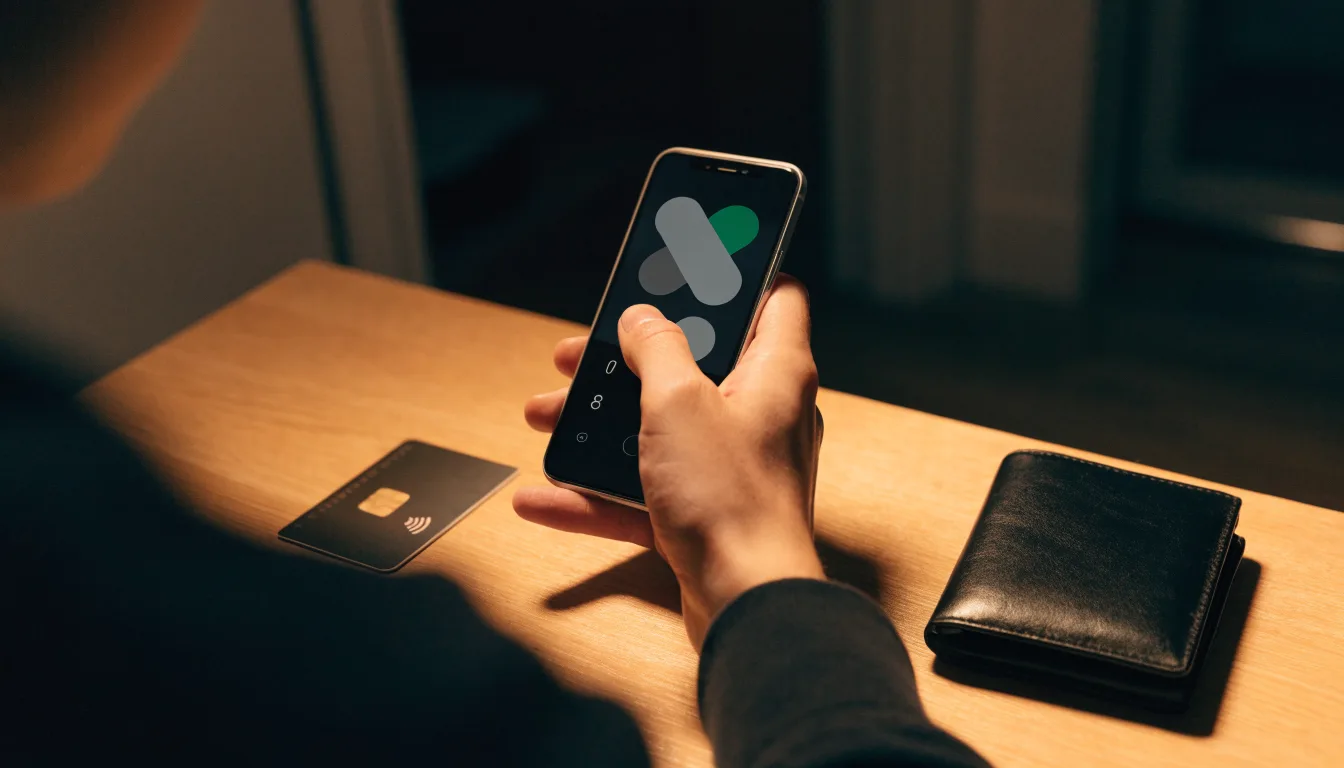
The same applies to “PayPal casino sites not on GamStop”. PayPal’s UK personal-account withdrawal to a bank carries no fee when no currency conversion is involved, but that fact says nothing about whether a particular casino is authorised to offer gambling in Britain or whether PayPal will be available there. Payment availability can change, and a familiar payment brand is not a gambling regulator.
UK rules give a useful benchmark: the Commission says withdrawal requests should not be obstructed for commercial reasons, and the British licence has no fixed maximum payout deadline. UKGC data for June to September 2024 recorded 44.2 million withdrawals at large operators; 96.3% cleared automatically, 3.5% within 24 hours and 0.1% up to 48 hours. It is an impressive operational benchmark, not a promise that every withdrawal is immediate. Offshore sites offer no UK equivalent standard.
Questions About Offshore Casino Sites
Are casino sites not on GamStop legal in the UK?
A foreign licence does not authorise an operator to offer commercial gambling to consumers in Great Britain. The Gambling Commission says that requires a Commission licence, and providing facilities without one is an offence by the operator under section 33 of the Gambling Act 2005. The issue is the operator’s conduct, not a claim that a British player is automatically committing that offence.
Do casino sites not on GamStop UK accept British customers?
Some offshore websites do accept customers in Britain, but acceptance is not the same as lawful UK authorisation. The Commission’s own research and enforcement data show illegal sites remain accessible. Their availability can change as domains are blocked, removed or replaced; a site’s current accessibility does not establish a valid British licence or reliable recourse if funds are disputed.
Are there genuinely new casino sites not on GamStop?
New domains and new operators appear, but a “new” label is easy to apply and does not establish a new legal entity or stronger oversight. Check the company, licence register and exact domain rather than relying on a launch date. In particular, confirm that a regulator’s certificate is current and applies to the site itself, not a related supplier or another domain.
What should “best casino sites not on GamStop” mean?
There is no defensible best-of list based solely on bonus size or advertised payout speed. The meaningful criteria are a verifiable operator and domain, precise withdrawal terms, a real complaint route and an honest statement of which protections do not apply in Britain. Even a well-documented offshore licence cannot provide the jurisdiction and UKGC safeguards of a British licence.
Are British casino sites not on GamStop actually British-licensed?
The phrase can be misleading. A site may be aimed at British customers or use British imagery, yet be licensed elsewhere—or have no comprehensive gambling licence at all. Check the Gambling Commission register for the exact domain and activity. If it is absent, calling the site “British” does not make it a British-licensed operator.
What help is available if gambling is causing harm?
GamCare’s National Gambling Helpline is free on 0808 8020 133, 24 hours a day, every day, with live chat and WhatsApp also available. Gamblers Anonymous England, Wales & Ulster can be reached on 0330 094 0322. In Scotland, Citizens Advice Scotland’s Gambling Support Service is on 0800 328 1131, Monday to Friday, 10am to 3pm.
The Number Is Not the Protection
The market figures show offshore gambling remains accessible, but a site’s availability is no substitute for a British licence, an enforceable complaint route or the protections of GamStop. The Commission’s 2.5% estimate applies to recent online gamblers, not the whole population; the National Gambling Helpline remains 0808 8020 133.
Casinos Not on GamStop
Content created by the «Betroundupuk.com» team