Safe Online Casino and the UK Market Numbers
 Available in US
A safe online casino is not a promise of winning; it is an operator whose rules, money handling and complaints route can be checked. In Great Britain, a Gambling Commission licence is the baseline. Offshore sites are not licensed here, and UK protections do not apply to them. The numbers show why that distinction matters.

The word “safe” does a lot of work in casino marketing. It can mean an encrypted page, a recognisable payment button, a licence badge, or simply that the games load without catching fire. Those are not equivalent claims. A secure connection protects data in transit; it does not establish that winnings will be paid, terms are fair, or an independent body can hear a dispute.
The market is large enough to generate both serious safeguards and serious temptation. The Gambling Commission put Great Britain’s gambling industry gross gambling yield at £17.5 billion for April 2025 to March 2026. Its separate estimate found that 2.5% of people who had gambled online in the previous four weeks had engaged with illegal gambling websites. That is not most people. It is still a measurable foothold for operators outside the British regime.
As of November 20, 2026, Betroundupuk.com looks at safety through the market evidence, not a parade of badges. A British licence offers the strongest practical framework; it does not make gambling harmless or guarantee a profit. A foreign licence may mean some rules exist, but it cannot replace British authorisation for commercial gambling offered to people in Great Britain. The distinction is less glamorous than a welcome banner. It is also the point.
Safe Online Casinos Start With the British Licence
The Gambling Commission says it is illegal to offer commercial gambling services to consumers in Great Britain without its licence, including where an operator has a licence elsewhere. The Commission advises checking its public register and confirming that the listed activities and domain names match the actual site. A logo copied onto a footer is not a register entry.
British-licensed operators have to meet licence conditions on identity checks, fair and open terms, customer funds and complaints. Since 31 March 2020, remote operators have also been required to participate in GamStop’s national online self-exclusion scheme. The scheme blocks access to participating Great Britain-licensed online operators. GamStop is often typed “gamestop”; the correct name is GamStop.
An offshore site has no UK Gambling Commission licence, so UK regulatory protections do not apply there. The Gambling Commission’s stated remit covers sites trading or advertising to Great Britain only where they hold its licence. Offshore sites are not covered by the British licensing framework or connected to its complaint and self-exclusion obligations. The fact that some are not connected to GamStop is not an escape route or a safety feature. If self-exclusion is in place, it remains for its full chosen term and then stays in place until the person contacts GamStop to remove it.
For support, the National Gambling Helpline operated by GamCare is free on 0808 8020 133, 24 hours a day, every day. The helpline also has live chat and WhatsApp. It is a support service, not a crisis line.
Safe Online Casinos and the Numbers Behind the Promise
The Commission’s estimate, published 5 November 2026, is a useful benchmark: among people who had gambled online in the previous four weeks, 2.5% had engaged with illegal gambling websites, with another 1.5% reporting use in the previous 12 months. Across the whole population, including non-gamblers, 0.6% reported engagement in the past four weeks and 94.4% showed no indication of using an illegal site.
The population-wide figure can sound reassuring, and in one respect it is. Illegal sites are not the ordinary experience of most adults. But it says nothing about whether a particular operator pays promptly or handles data properly. Meanwhile, the Commission identified 586 illegal gambling websites accessible to Great Britain consumers in September 2026. A market can have a small share of users and still present a wide choice of doors.
Other estimates should not be blended into one convenient headline. H2 Gambling Capital estimated £16.6 billion staked with illegal gambling operators in the UK in 2025; a separate industry-commissioned study estimated £2.7 billion staked online annually. They use different methods and definitions. I would not treat either as a tidy census. The Commission’s survey estimate is narrower, but transparent about who was asked and when.
Safe Online Casino Real Money Means Checking the Rules
When money is involved, a safe online casino real money claim should be tested against concrete protections, not the number of payment logos. British-licensed sites provide the comparison standard. Offshore operators vary: some publish verifiable licences, clear dispute routes and terms; others rely on old seals, vague ownership or clauses that let them stretch a payout indefinitely. Foreign regulation is not worthless, but it is not British regulation.
| Check | British-licensed operator | Offshore operator accepting GB customers |
|---|---|---|
| Authorisation | Gambling Commission licence required | No UK licence; a foreign licence does not replace it |
| Identity checks | Identity must be verified before gambling | Standards and timing depend on the operator and its regulator |
| GamStop | Required to participate since 31 March 2020 | Not connected to the UK scheme |
| Complaints | Internal process, then free approved ADR if unresolved after eight weeks | Depends on the stated regulator and dispute service; UK ADR access is not assured |
| Withdrawal deadline | No fixed maximum number of days in the LCCP; terms must be fair | Check the written terms; a foreign badge sets no UK payout deadline |
The table is not a claim that every British operator behaves perfectly. The Commission still receives around 2,000 complaints a year about withdrawal delays, and withdrawals remain its leading consumer complaint topic. Regulation gives a route to challenge conduct; it does not make every transaction instantaneous. That is a meaningful difference, not a magic wand.
Safe Casino Online Depends on Identity Checks
Identity checking is a sensible safeguard when done properly. British-licensed operators must establish and verify identity before allowing gambling, including name, address and date of birth. A company may confirm details electronically; if it cannot, it may ask for documents such as a passport, driving licence or household bill. Checks may be updated when circumstances change, and anti-money-laundering duties can require further information.
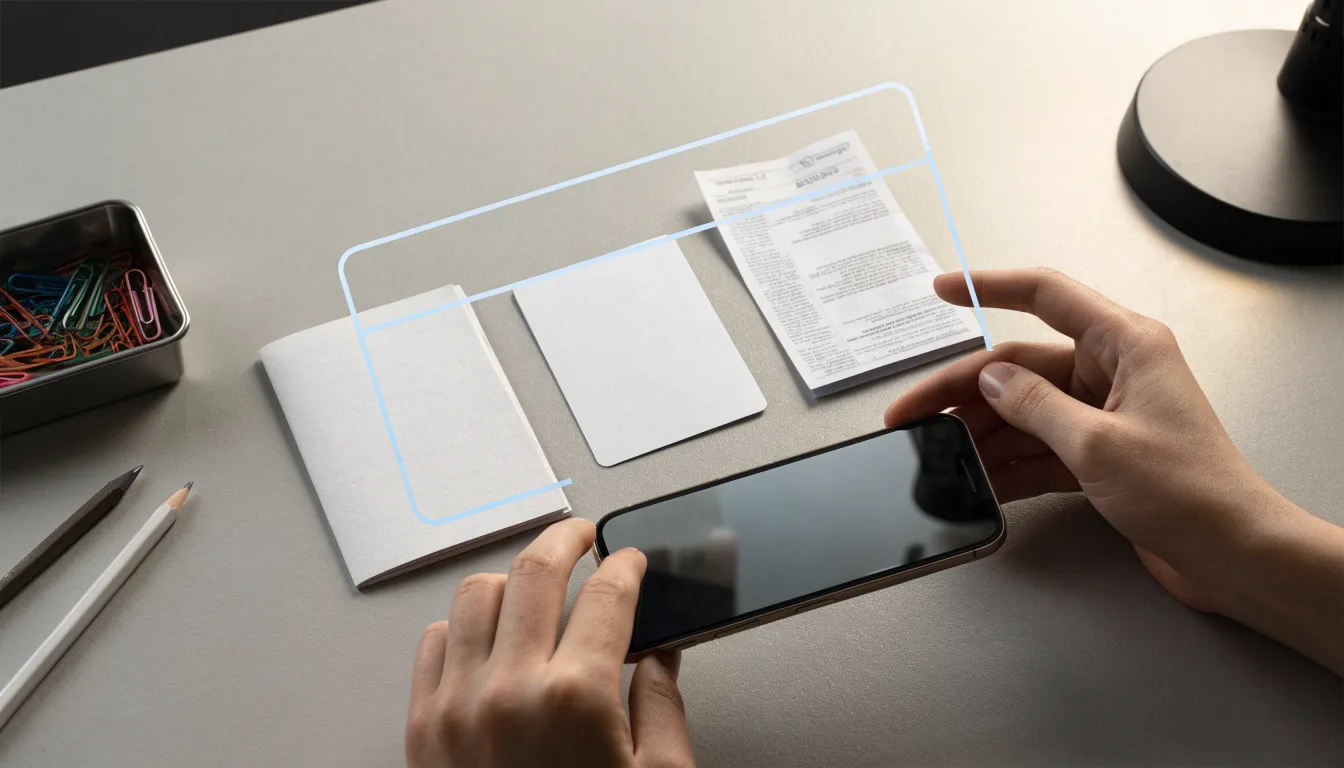
The warning sign is not a request for proof in itself. It is a site that lets an account deposit and play, then invents a document hurdle only when a withdrawal is requested, despite being able reasonably to request the information earlier. Licence condition 17.1.1 says a withdrawal request must not trigger an avoidable new information requirement. It does not prevent checks required at that moment by another legal duty, such as anti-money-laundering rules.
A weak operator may use unclear requirements, repeatedly ask for new documents, or refuse to explain what is missing. The Commission reported in August 2026 that over a quarter of complaints reaching its Contact Centre concern identity verification. A sound process explains what is needed, how to submit it securely, and why. A document request can be legitimate; an opaque obstacle course is not.
Safer Online Casino Means More Than Secure Payments
Payment methods tell a useful but limited story. A card or e-wallet logo shows that a route may be available; it does not prove the casino is licensed or that funds are protected if the company fails. For British-licensed operators, customer-funds terms must state whether money is protected in insolvency and at what level. Separate accounts are not a guarantee of repayment if the business becomes insolvent.

Withdrawal terms deserve a close read. British rules prohibit reverse withdrawals: once a withdrawal is requested, the operator must not offer the option to cancel it and gamble the money again. This is a sensible rule. It removes a particularly obvious trapdoor. The Commission has no fixed maximum number of days for all withdrawals, but it says delays should be explained and commercial friction should not be placed in the way of cashing out.
The Commission’s own data for June to September 2024 covered 44.2 million withdrawals at large online operators. Of these, 96.3% cleared automatically, 3.5% cleared within 24 hours and 0.1% took up to 48 hours. Those are strong figures for that dataset, not a promise about every operator or every transaction. The Commission has separately said there is no valid reason to delay a payout where it has no regulatory concern about the customer.
A site’s payment page should state fees, processing stages, limits and the currency used. Be wary of terms that allow indefinite “review”, impose a maximum on withdrawals, or let the operator confiscate a deposit merely because a customer fails identity verification. The British regime rejects those shortcuts. An offshore operator may write its own terms, and the practical route to enforce them may be distant.
Five Signs of a Trustworthy Operator
The Licence Matches the Domain
Search the Gambling Commission public register and match the exact website domain and licensed activity. A seal that links nowhere, or a register entry for a different domain, is not evidence. If the operator is offshore, verify its licence directly with the named regulator and treat that as a different, weaker level of protection for a GB customer.
The Terms Name the Operator
Look for the legal business name, contact details and governing complaint procedure in the terms. Then check whether those details agree across the footer, privacy notice and regulator record. A brand name is not necessarily the legal entity taking deposits. If the paperwork keeps changing its subject, confidence should not improve.
Identity Checks Are Explained Before Deposit
The operator should state what information may be needed, when it may be requested and how it is submitted. Check the cashier and account terms before any deposit. British rules expect this information in advance; a surprise request at withdrawal is a warning if it could reasonably have been made earlier.
Withdrawals Have Clear, Fair Terms
Read the withdrawal section for processing steps, fees and any verification conditions. British rules do not permit reverse withdrawals, withdrawal caps on deposit balances or terms that confiscate funds for failing identity checks. For an offshore site, look especially hard for discretionary delays and clauses that let the operator void winnings without a defined reason.
There Is a Real Complaints Route
British licensees must provide a route to approved alternative dispute resolution if a complaint remains unresolved after eight weeks. Check the operator’s policy for the named ADR provider and the steps for internal escalation. Offshore operators may name their own dispute service, but a logo is not proof that it is independent, accessible or able to secure payment.
How to Judge a Casino Before Money Is Involved
- Check the public register. Match the exact domain and activity, because a valid licence attached to another site proves nothing about this one.
- Read the operator’s legal terms. Find the contracting company, its address, the complaints process and the law or regulator it names. A marketing brand alone is too thin a paper trail.
- Read identity and withdrawal rules together. Confirm what documents might be requested and whether the process can hold a payout. This exposes avoidable late verification and clauses that build in delay.
- Inspect the money protections. On a British site, find the customer-funds disclosure and the stated insolvency protection rating. “Funds held separately” does not itself guarantee recovery.
- Check the bonus before accepting it. Since 19 January 2026, British-licensed operators cannot impose wagering requirements above 10 times bonus funds. Offshore offers are not bound by that cap; read the calculation, expiry and maximum-cashout terms.
- Confirm the complaint route and keep records. Save the terms, transaction confirmations and correspondence. British operators must offer free approved ADR after the internal route and eight weeks if the dispute remains unresolved.
These are ordinary checks, not a way to make gambling risk-free. A licence can establish oversight and give recourse; it cannot turn a losing game into an investment. The Commission’s 2025 survey found 2.4% of adults had a PGSI score of 8 or more, a measure it described as stable across the survey’s three years. The market’s safeguards matter because the risks are real, not because a badge abolishes them.
Questions About Safe Online Casinos
Are online casinos safe?
Some are more accountable than others. In Great Britain, a Gambling Commission licence brings enforceable conditions on identity, terms, complaints and self-exclusion, but does not guarantee a win or flawless service. Offshore sites are not licensed here, and UK protections do not apply. Safety is therefore a question of oversight, payment terms and recourse, not simply encryption.
Are there any safe online casinos in the UK?
A British-licensed operator is the strongest available regulatory baseline for a casino serving Great Britain. Check the exact domain and activity on the Commission’s public register; a badge alone is not enough. Even licensed sites can delay withdrawals or make mistakes, but customers have a formal complaints route and access to approved ADR when the internal process fails.
How do you know if an online casino is safe?
Check the licence first, then compare the domain with the regulator’s register. Read the legal operator name, identity-check policy, withdrawal terms, customer-funds disclosure and complaints route. Look for specific, readable rules rather than broad promises of “instant payouts” or “complete security”. If ownership or dispute arrangements are difficult to identify, that is itself useful evidence.
Are online casino games safe to play?
The question has two parts. Game fairness depends on the operator’s controls and the game’s underlying testing; a game title or software logo alone cannot establish that. Personal financial risk is separate: even a properly operated game is designed as gambling, not as a source of income. A licence improves accountability but removes neither uncertainty nor the possibility of loss.
Is a foreign licence enough for a safe online casino UK?
No. A foreign licence may impose rules in its own jurisdiction, but the Gambling Commission says a foreign licence does not authorise commercial gambling offered to consumers in Great Britain. British protections, including Commission oversight and the required GamStop participation, do not attach simply because another regulator’s name appears on the site.
What happens if a complaint about an offshore casino goes wrong?
The UK Gambling Commission does not resolve individual complaints or recover money for consumers. Its approved ADR arrangements apply to British licensees, and an offshore site may offer a different service under its own rules. Before relying on that route, verify the provider with the named regulator and establish whether its decision can actually be enforced against the operator.
The Useful Meaning of Safe
A safe online casino is best judged by the strength of its oversight and the clarity of its terms, not the shine of its badge. For support, the free National Gambling Helpline is 0808 8020 133, available 24 hours a day. The Commission counted 586 illegal gambling websites accessible to Great Britain consumers in September 2026.
Safety and Verification
Content created by the «Betroundupuk.com» team